
Acrylic Solid Surface
Home > Acrylic Solid Surface 101
You’ve probably heard of acrylic solid surface, an increasingly popular material being used in a variety of applications, from residential countertops to strictly hygienic environments like hospital rooms. But what is acrylic solid surface?
The composition and performance qualities of acrylic solid surface can provide significant short- and long-term benefits when compared to wood, plastic laminate, metal or stainless steel building materials. Below is a comprehensive ‘101’ of the basics of acrylic solid surface. You’ll see why we build our products with this remarkably versatile material.
What is acrylic solid surface?
Acrylic solid surface was only an idea in 1963, when in a laboratory in Wilmington, Delaware, young scientist Donald Slocum finally developed the perfect surface material he had be working so hard to create. While materials like granite, marble, and laminate were widely used in commercial and residential spaces, they were naturally porous, easily harboured bacteria or didn’t have a long lifespan. The material Slocum created fixed these issues- it was durable, sanitary, non-porous, easy to repair and aesthetically pleasing.
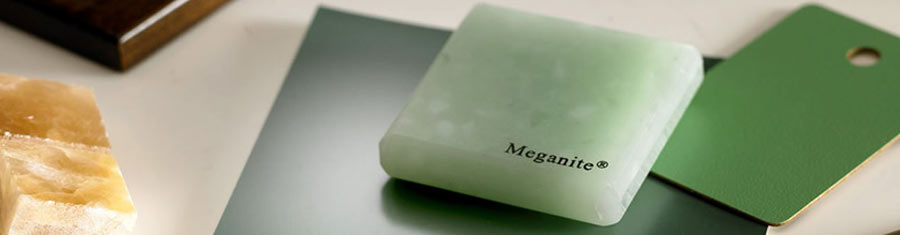
In 1971 the material made its debut at the Association of Homebuilder’s International Builder’s Show. Since Corian’s patent expired, many companies have created their own brands of acrylic solid surface, including Meganite®, DuPont™ Corian®, Aristech Avonite Surfaces®, and Wilsonart® Solid Surface to name a few.
How is acrylic solid surface made?
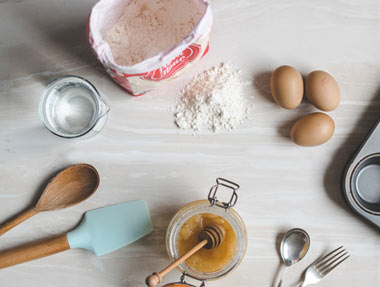
Making acrylic solid surface is like baking a cake; you need dry ingredients, liquids, food dyes and decorations. Likewise, to create acrylic solid surface, you need a combination of filler, a binder, pigments and particulates. Here’s a closer look:
Filler
In acrylic solid surface, the filler is typically Aluminum Trihydrate (ATH), which is a natural mineral likened to stone dust that takes the form of white powder and adds tensile strength to the final product. This tensile strength is what allows acrylic solid surface products to carry loads without faltering.
Binder
Resin, found naturally in plants, is the most common binder used in acrylic solid surface. Recipes commonly call for acrylic resin, which creates a stronger thermoformable solid surface sheet. Polyester resin can also be used, which creates a glass-like finish but results in a slightly more brittle solid surface sheet.
Pigment
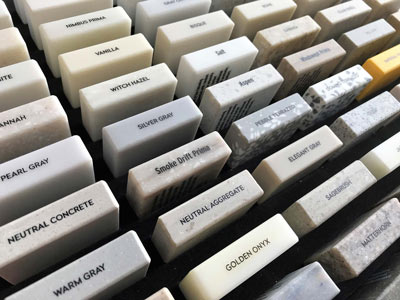
There are nearly limitless acrylic solid surface colour options due to the vast number of pigments and thousands of colour combinations. To help control cost and production, each manufacturer offers a set of standard colour options. Some colours can be closely matched between different acrylic solid surface manufacturers.
Particulates
Particulates are various-sized chips of acrylic solid surface that are added back into the mix to make patterns or designs in the final product. Particulates allow for a nearly limitless number of designs and textures, including mimicking natural stone finishes such as quartz.
ATH and resin combine to create acrylic solid surface, and pigments and particulates are added during the casting process to give the solid surface its prescribed colour and design.
What makes it different?
There are three main characteristics of acrylic solid surface that make it a better option than other materials, saving you money in the long run: It’s hygienic, it’s durable and it has almost unlimited design potential.
Hygienic
Solid surface is easy to clean, and its lack of seams and cracks makes germs and bacteria growth less prominent.
- It can be constructed into a continuous, seamless product, removing grout seams and edges. Dirt tends to build up in cracks and corners, so solid surfaces retain less dirt and bacteria.
- It’s non-porous, which means you don’t have to continually re-apply protective finishes to keep microscopic holes sealed like in granite.
- It’s solid, all the way through to the core, which makes it tamper-resistant and extremely durable around edges, a common failure point for plastic laminates.
Durable
Solid surface is extremely durable and is guaranteed for up to 10 years by most manufacturers.
When solid surface is manufactured, it’s “cured” so that the chemical reactions are almost fully completed. Because the chemical reactions and bonds are nearly 100 percent complete, the final product is very stable and inert, allowing it to hold significant weight and withstand intensive use.
The ATH composition in solid surface gives it a different tensile strength than many materials and improves resistance to scratching, heat, fire, water, chemicals and stains. Moreover, most accidental damage inflicted on your solid surface can usually be repaired. If scratches or blemishes occur they can be easily dealt with by a Scotch Brite pad or sanding.
Design potential
Solid surface looks great. The consistency in colour and design give it a clean, modern look. Limitless colour and design options ensure you’ll find something that fits your project.
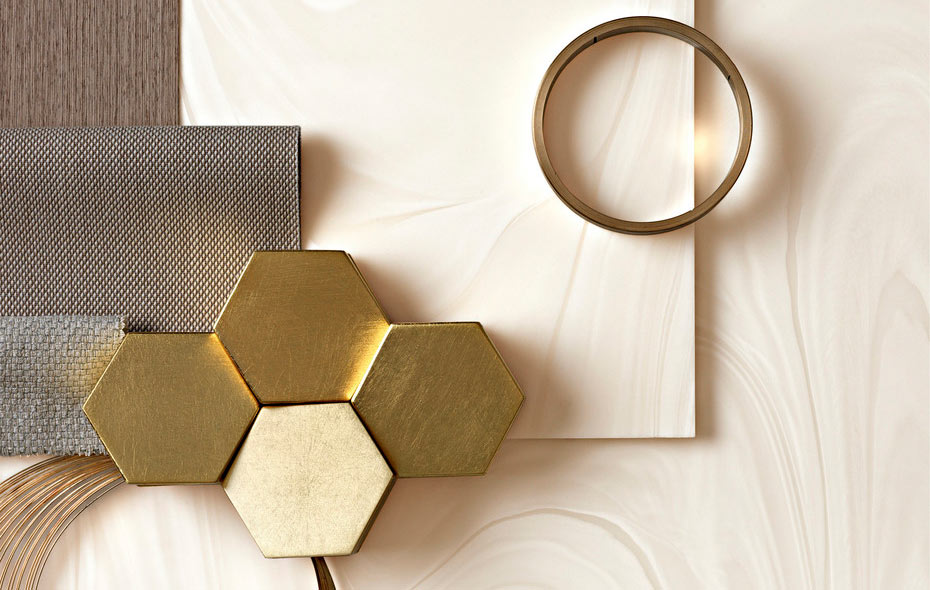
- It’s homogenous, so the material and colour is solid throughout the entire product, giving it a clean, simple look.
- It’s thermoformable, meaning it can be heated and formed, and it has a more continuous shape that is easier for the eyes to follow. Since acrylic can be formed into nearly any shape you can create a product that is both sleek and memorable.
- The material can even be made to be translucent, which when backlit allows the surface to glow or light up custom designs, patterns, company names and logos. It’s also soft enough to allow etching by CNC.
Where can you use it?
While acrylic solid surface was first conceived primarily as an alternative to granite, marble or laminate countertops, it’s now used to build a variety of application and products. This can include wall cladding, furniture, tables, desks, cabinets, locker systems and restrooms. Here are a few places to use acrylic solid surface:
Heavily trafficked areas
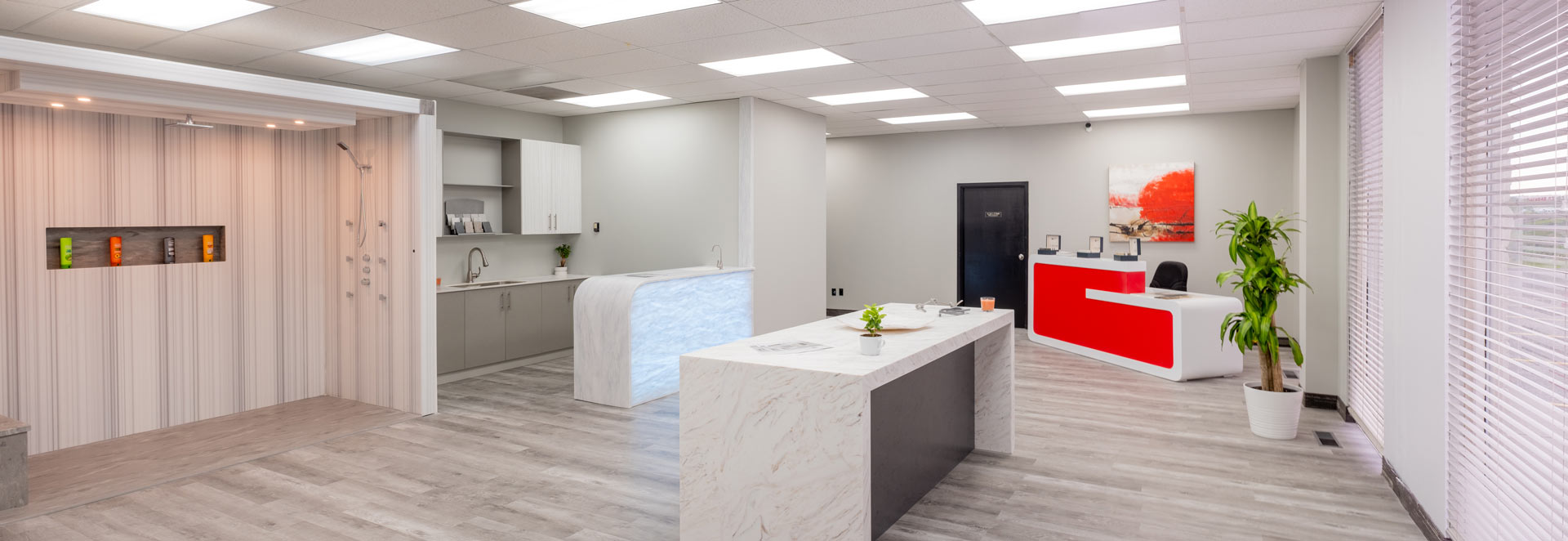
Because solid surface is so durable, it’s great for high traffic areas. For example, it’s popular material for reception desks, lobby spaces, restrooms, restaurant tables, rentals, educational labs and retail spaces. The products not only withstand intense daily use, but they are also easily cleaned and, after years of use, can be sanded to a brand new appearance.
Healthcare environments
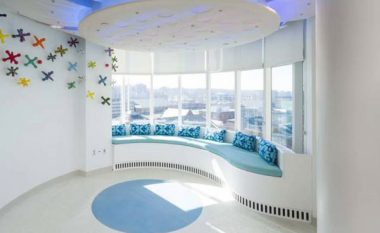
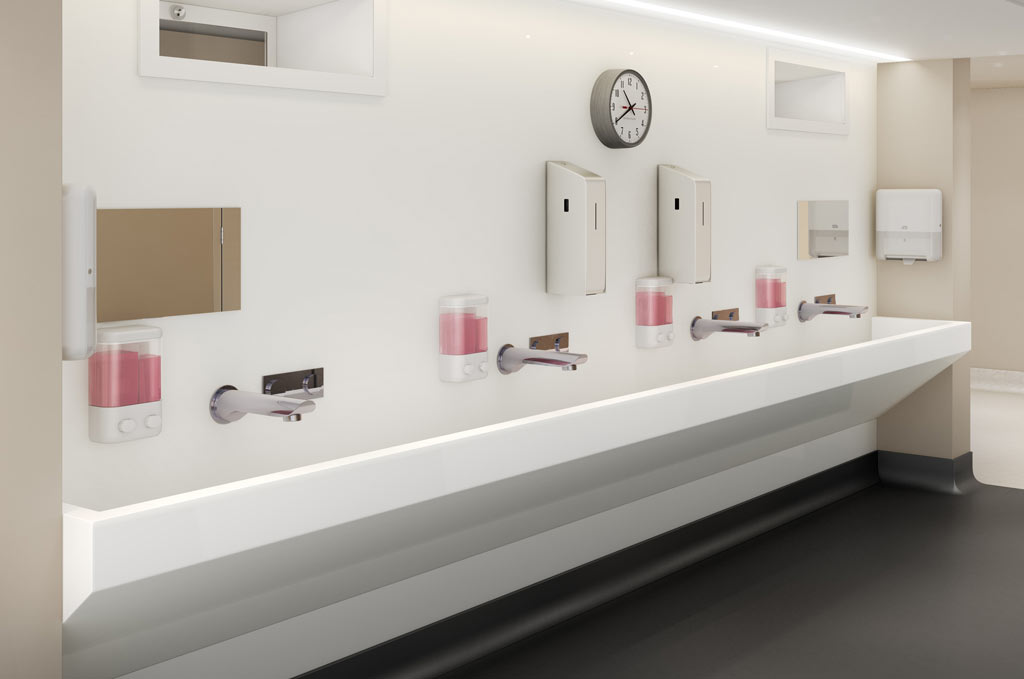
Acrylic solid surface is more sanitary than traditional material. Its non-porous and seamless qualities result in less dirt and bacteria build-up, making it perfect for environments such as hospitals that require cleanliness to help prevent healthcare-associated infections. Many brands also offer additional antimicrobial protection integrated into the sheet, such as Meganite® AcryMed.
Hospitality and commercial buildings
For those businesses and designers looking for a more elegant, polished look, acrylic solid surface provides the perfect solution. Designers can create almost any shape with solid surface, allowing for rare but memorable designs for a high-end environment. The limitless options give designers and architects freedom in creating the product, allowing them to create sophisticated and elaborate solid surface products with a sleek finish.
Takeaways on why you should use acrylic:
- It’s durable
- It’s repairable
- It’s easy to clean
- It’s hygienic and seamless
- It has hundreds of design options
- It’s customizable
*** Please note that the images used on this page are not necessarily work done by SW Dental, and are only present to illustrate product options. All images and products in the images belong to their respectful owners.